Riverside Drive Locksmith NYC Corp Service Team
Local locksmith team
Jul 22, 2026 11 min read
You're standing at your door, locksmith on the phone, and they ask: 'What kind of lock do you have?' Most people pause. Is it a mortise lock? A regular door knob lock? Something else entirely? It sounds like a minor detail, but knowing the answer before you call can save time, speed up your service, and help you have a smarter conversation about your options — whether you need a lockout resolved at midnight on Riverside Drive or you're planning a full hardware upgrade for your Upper West Side brownstone.
This guide is built for exactly that moment. In plain language, with real visual cues, we'll walk you through the key differences between a mortise lock and a door knob lock, how to identify what's on your door right now, and what that means for the service you'll need. No jargon, no assumptions — just practical knowledge for New York homeowners, renters, and building managers.
## What Is a Mortise Lock — and How Do You Spot One?
A mortise lock is a lock mechanism that is installed inside a carved-out pocket — called a mortise — cut directly into the edge of the door. Instead of sitting on the surface of the door like a standard knob or lever assembly, the entire lock body is recessed into the door itself. This gives it a flush, built-in appearance and makes it substantially more robust than surface-mounted hardware. If you live in a pre-war building, a townhouse, or an older brownstone — common all across Manhattan, Brooklyn, and the Bronx — there is a very good chance your front door has a mortise lock set rather than a modern cylindrical knob lock.
Here is how to spot one: Look at the edge of your door (the narrow strip you see when the door is open). If you see a large rectangular metal plate — often two to four inches tall — with both a latch bolt and a deadbolt visible side by side along that edge, that is almost certainly a mortise lock. On the face of the door, a mortise lock set typically features a separate keyhole below or above a thumb turn or lever handle, rather than a single integrated knob that contains the key cylinder. The escutcheon plate (the decorative trim around the hardware) tends to be long and narrow, covering both the handle mechanism and the lock cylinder in one continuous plate.
## Door Knob Lock Basics — The Most Common Hardware in NYC Apartments
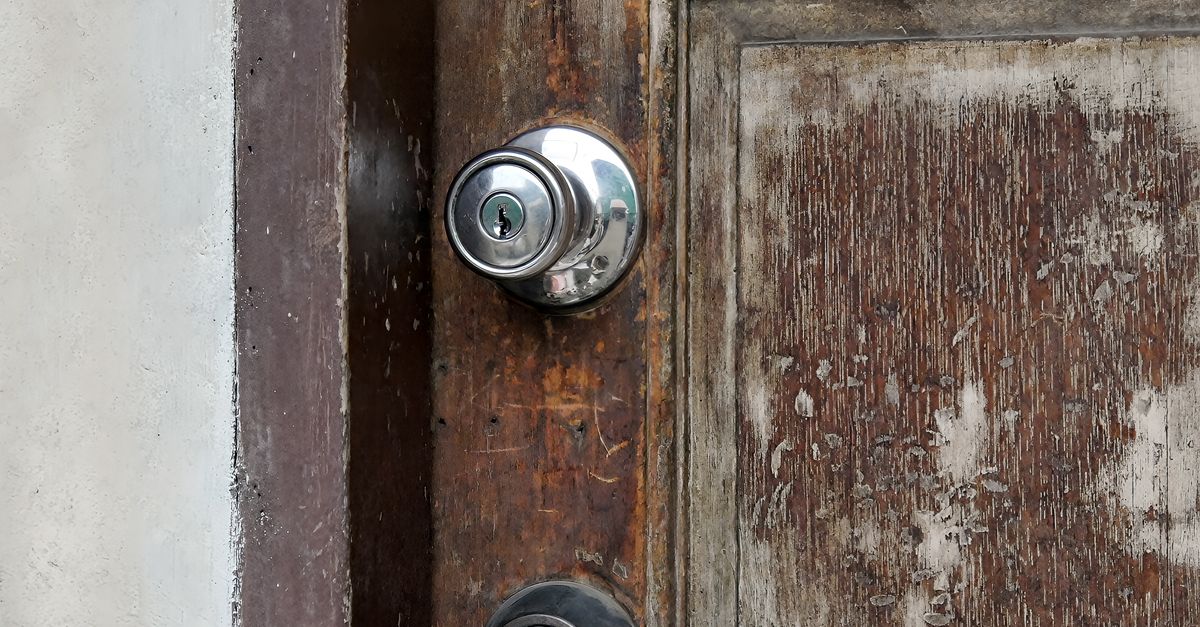
A door knob lock — sometimes called a cylindrical lock — is what most people picture when they think of a standard interior or apartment door lock. The lock mechanism is housed entirely within the knob itself, and the key cylinder sits at the center of the knob or, in the case of a door knob with lock and key on both sides, within knobs on both the interior and exterior faces of the door. Installation requires only a round bored hole through the door face and a smaller latch hole through the door edge — a much simpler cutout than the deep rectangular pocket required for a mortise lock.
Identifying a door knob lock is straightforward: if you see a round knob that you grip and rotate to open the door, and the keyhole is built directly into the center of that knob (or into a separate deadbolt above it), you have a cylindrical door knob with lock. These are extremely common in apartment buildings built from the 1960s onward, in interior office doors, and in rental units across all five boroughs. Brands like Schlage and Kwikset are among the most widely installed, and their components are well-standardized — meaning a trained locksmith can quickly identify the right tools and replacement parts for your specific model.
## Side-by-Side: Four Visual Clues That Tell Them Apart
Use these four checkpoints when you are standing at your door. First, look at the door edge. A large rectangular metal faceplate with two bolt openings points to a mortise lock. A single small latch bolt with a simple strike plate points to a cylindrical knob lock. Second, look at the escutcheon or trim plate on the door face. A long, vertical plate running several inches and covering both a handle and a separate keyhole is a hallmark of a mortise lock set. A smaller, round or oval rose plate around a single knob is the mark of a door knob lock. Third, look at how the handle and the lock relate to each other. On a mortise system, the handle (lever or knob) and the key cylinder are separate components connected through the same large body inside the door. On a cylindrical lock, the key cylinder and the handle are one integrated unit — you cannot separate them without disassembling the knob. Fourth, check the door thickness and age. Mortise locks are most commonly found on doors that are 1.75 inches thick or more, and they are nearly universal on doors manufactured before 1960. If your building has original hardware from the early 20th century, a mortise lock is the safe assumption.
One practical note for New Yorkers: in many pre-war buildings along streets like West End Avenue, Fort Washington Avenue, or in neighborhoods like Park Slope and Astoria, the same door will have both a mortise lock (original to the building) and a secondary deadbolt or rim lock added later. Knowing you have a layered system like this is important information to share with your locksmith before they arrive, because the tools, time, and parts needed will differ from a single-lock job.
## What This Means When You Call a Locksmith — Lockouts, Rekeying, and Upgrades
Knowing your lock type before you call makes every part of the service conversation cleaner. For lockouts, a skilled locksmith uses different non-destructive techniques for a mortise lock versus a door knob lock — and knowing in advance means they can arrive with the right equipment the first time. If you are wondering how to rekey a lock you already own, the process also differs: rekeying a mortise lock requires disassembling the cylinder from the lock body, while rekeying a standard door knob lock typically involves removing the knob and working directly with the pin stack inside the cylinder. Both are routine services for an experienced locksmith, but they are not interchangeable procedures. Never attempt to pick or force your own lock — beyond the risk of damaging expensive hardware, you could void any rental agreement or building insurance. If you are locked out, check for a building super, a trusted neighbor with a spare key, or an accessible secondary entrance first, then call a professional.
The cost of locksmith service — whether you need a lockout resolved, a full mortise lock set replaced, or rekeying done across multiple units for a commercial property — depends on several real factors: the type and brand of hardware involved, the complexity of the job, the time of day (overnight and weekend calls reflect different logistics), travel distance within the metro area, and whether replacement parts are needed on the spot. At Riverside Drive Locksmith NYC Corp, we confirm an exact price upfront before any work begins, so there are no surprises. If you are trying to plan ahead or just need an honest assessment, call us directly at 646-793-9803 — we answer around the clock and can give you a straight answer based on what you actually have on your door.
## Our Services — What a 24/7 Mobile Locksmith New York Team Actually Handles
Riverside Drive Locksmith NYC Corp operates as a fully mobile, 24-hour emergency locksmith team serving all five boroughs and surrounding areas. Because we work out of fully equipped service vehicles rather than a fixed shop, we come to you — at your apartment door in Washington Heights, your office in Midtown, your car on the FDR, or your storefront in Bushwick. Here is a genuine picture of what our experienced locksmiths handle every day: residential lockouts, commercial lockouts, automotive lockouts, mortise lock installation and repair, mortise lock set replacement, cylindrical door knob lock installation, deadbolt installation and upgrade, lock rekeying for homes and multi-unit buildings, master key system setup, high-security lock upgrades, broken key extraction, door lock repair after attempted break-in, mailbox lock replacement, gate lock installation, padlock removal and replacement, car key replacement, transponder key programming, key fob replacement and programming, ignition lock cylinder repair, smart lock installation and troubleshooting, access control system installation for commercial properties, intercom and buzzer system lock integration, safe opening and combination changes, window lock installation, and emergency board-up coordination following a forced entry. Whether you are a homeowner comparing mortise lock options for a gut renovation or a property manager dealing with a 3 a.m. tenant lockout in the Bronx, our team handles it without requiring you to come to us — we come to you.
## How Much Does an NYC Locksmith Cost — and What Makes a Good One?
How much does an NYC locksmith cost, and how much do locksmiths charge on average? These are fair questions, and the honest answer is that there is no single number. Pricing depends on the type of lock (a mortise lock replacement involves more labor and parts than rekeying a basic door knob lock), the time of day (emergency locksmith calls outside standard business hours involve different logistics), your location within the metro area, and the specific parts needed. How much does an emergency locksmith cost near me? Again, the factors are the same — and the right answer is the one a locksmith gives you after understanding your specific job, not a generic figure pulled from a website. At Riverside Drive Locksmith NYC Corp, we give you a confirmed, upfront price before we start any work, full stop.
How do you find a reputable locksmith in NYC? The most reliable signal is a locksmith who asks real questions before quoting — what kind of lock do you have, what is the situation, what is the address — rather than one who throws out a flat number immediately. How much does a local locksmith charge versus a non-local one? Local matters in New York: a team that knows the difference between a pre-war mortise lock set on a Crown Heights brownstone and a modern cylindrical lock in a Murray Hill high-rise arrives prepared. Where can you find an auto locksmith in New York when you are stranded? We cover automotive locksmith services across the metro area as well — car lockouts, key replacement, transponder programming — from the same 24/7 mobile team. Call 646-793-9803 any time, day or night, and a real person will answer.
Frequently asked questions
What is a mortise lock, and is it more secure than a door knob lock?+
A mortise lock is a lock mechanism installed inside a pocket cut into the door edge, rather than sitting on the door surface. Because the entire lock body is embedded within the door, mortise locks are generally considered more resistant to forced entry than standard cylindrical door knob locks — the door itself reinforces the hardware on all sides. That said, security also depends on the quality of the specific model, the condition of the door frame, and whether the strike plate is properly anchored. A trained locksmith can assess your current setup and recommend whether an upgrade makes sense for your situation.
How do I know whether I need my lock rekeyed or fully replaced?+
Rekeying changes the internal pin configuration of your existing lock so that old keys no longer work — it is the right call after a move, a lost key, or a change in household members, as long as the lock hardware itself is in good condition. Replacement is necessary when the lock mechanism is damaged, worn, outdated to the point where rekeying is not possible, or when you want to upgrade to a higher-security option. For a mortise lock, rekeying is a more involved process than with a standard door knob lock, so it is worth having a professional assess the hardware before deciding. Call 646-793-9803 and we can walk you through the options based on what you have.
I tried picking my door knob lock after locking myself out — is that safe to do?+
We strongly recommend against attempting to pick or force any lock yourself. Beyond the real risk of damaging the hardware — which can turn a simple lockout into a costly replacement job — you may also face complications with your landlord, building management, or building insurance if damage occurs. The safest steps in a lockout are: check whether another entrance is accessible, contact your building superintendent if you have one, retrieve a spare key from a trusted person, and if none of those apply, call a professional locksmith. Our team can resolve most residential lockouts non-destructively and quickly. We are available 24 hours a day at 646-793-9803.
Can a locksmith service both my mortise lock and my car in the same visit?+
Yes. Riverside Drive Locksmith NYC Corp is a full-service mobile locksmith team, meaning the same dispatch that handles your residential mortise lock installation, rekeying, or lockout also covers automotive services — car lockouts, key replacement, transponder programming, and ignition work. If you have both needs at the same location, let us know when you call and we will make sure the responding technician is equipped for both. Call 646-793-9803 and explain your situation — we will confirm exactly what we can do and the upfront cost before anyone leaves the garage.